Many buyers out there worry about one thing: the final plush looks only close enough, not truly like the original design. That is the real problem. Custom plush toys work only best when they feel true to the original character, mascot or illustration. Even smaller changes in face shapes, body size, stitching or colour can make the toy feel really off. That can hurt brand recognition and also reduce the emotional appeal.
Good results do not happen by luck. Accurate custom plush toys came out from two things: a clear designing brief and a manufacturer with the strong technical skill. You will learn from here how to prepare your artwork, choose the right plush maker, approve the prototype and check production quality before your bulk manufacturing starts.
What causes custom plush toys to lose design accuracy?
Even great artwork can change during production. The main reason is simple: a flat 2D design does not always turn neatly into a 3D plush. A face may look different once the eyes and mouth are embroidered or appliquéd. Fabric texture can also change how colors look and how clearly shapes show.
Stuffing matters too. Too much filling can make the plush look too round or stiff. Too little can make it look loose or uneven. Seams and pattern cuts also affect proportions, especially around the head, arms, and legs. The risk gets higher when the design has unusual body shapes, small details, or extra accessories. That is why custom plush toys need careful planning at every step, not just good artwork.
Start with a production-ready design package
If you want custom plush toys to match your original art, do not send one image and hope for the best. Give the factory enough information to build from.
1) Provide more than one image
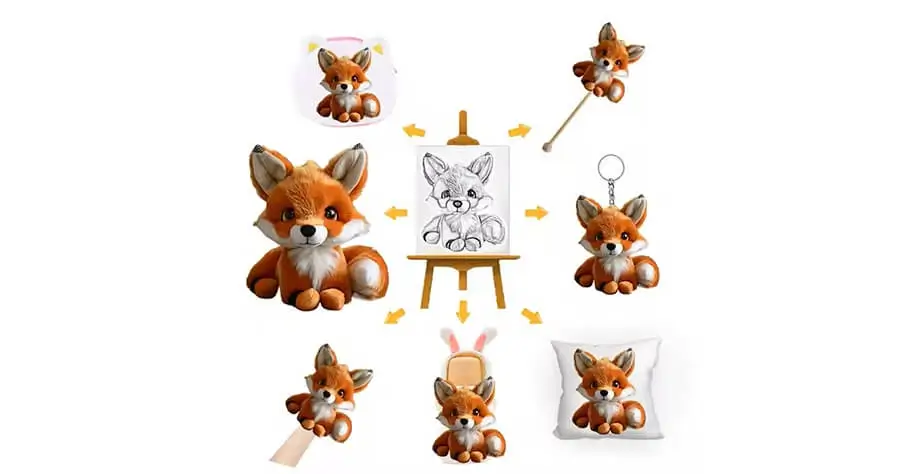
Send front, side, and back views. Add close-ups of the face, logos, accessories, trims, and any detail that has to stay exact. Include a size reference too. This matters for all custom plush toys, but it is even more important for plush toy designs with unusual proportions or side details. CustomPlushMaker’s FAQ and upload process both point buyers toward sharing photos, drawings, and reference files as the basis for design and sample work.
If you are creating stuffed animals plush toys for a mascot, mark the finished size early. A six-inch plush needs different simplification choices than a sixteen-inch plush. Large plush animal toys can hold more shaping and detail than smaller ones.
2) Define what must not change
List the non-negotiables. Spell out the exact facial expression, ear length, arm length, leg length, body shape, logo placement, embroidery details, and accessories that must stay. If the smile is the heart of the character, say that. If the ears must sit high, say that. If the body should stay slim, say that.
This keeps custom plush toys from drifting during development. It is especially useful when you design your own plush toy from rough concept art or when the factory is helping with plush product design support. CustomPlushMaker’s design service describes the process as collaborative and revision-based, which is exactly why these non-negotiables should be stated early.
3) Specify color references early
Color is one of the easiest ways for custom plush toys to feel “off” even when the sewing is fine. Use Pantone references when possible. If the exact shade is important, ask for fabric swatches or sample confirmation first. This is smart for bulk mascot and brand orders, especially premium projects that need to feel more like high end stuffed animals than generic shelf product. Pantone says its numbering system supports color communication across fabrics and other materials, and CustomPlushMaker’s own swatch pages and drawing-to-plush content show color swatch approval before production.
4) Notes for picture-to-plush projects
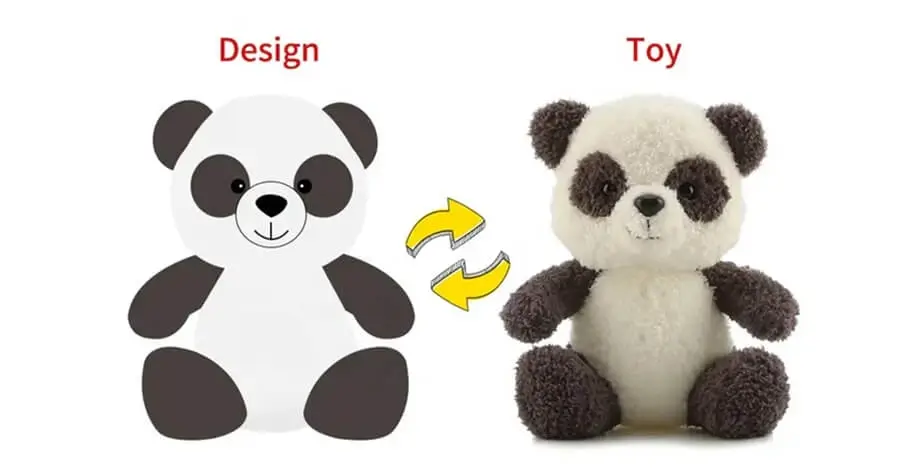
If you want to make stuffed animal from picture art, add notes about depth, symmetry, and which features should stand out in 3D. A photo or flat drawing does not tell the factory how thick the muzzle should be or how rounded the feet should feel. This is why picture-based custom plush toys need extra guidance. Photos help, but they do not answer every build question. Cute names for plush toys can come later. First, protect the shape that makes the design recognizable.
How to evaluate a custom plush toy maker for design accuracy
A good supplier does more than sew. A good supplier can explain why a design will work in plush and where it may need careful adjustment.
Review relevant past work
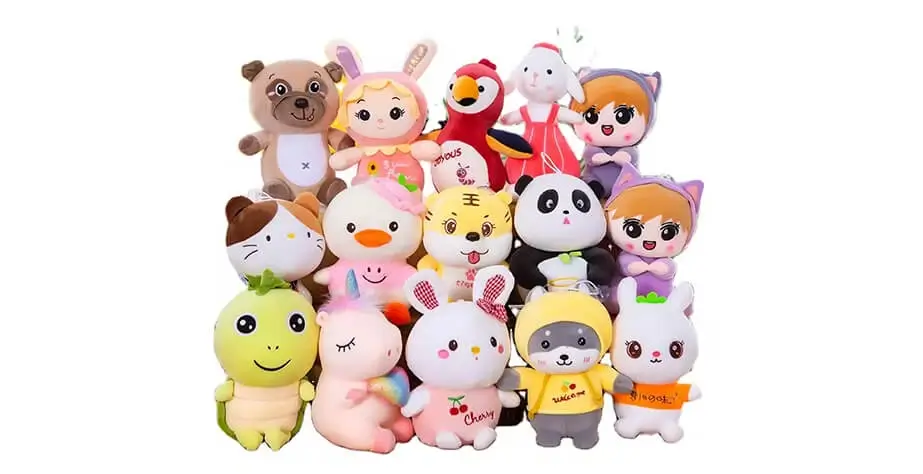
Ask for examples close to your use case: mascots, illustrated characters, book characters, anime plush, or irregular shapes. A factory that makes basic bears well may still struggle with character dolls, asymmetrical characters, or stylized plush with layered accessories. CustomPlushMaker’s site itself separates mascot, anime, book-character, art-and-drawing, and large-plush work into different categories, which shows why relevant examples matter.
Ask how they convert 2D art into 3D plush
This is one of the best questions you can ask. A capable supplier should be able to explain pattern development, shape simplification, proportion balancing, and how facial features will be adapted for embroidery, print, or appliqué. That conversation matters because custom plush toys are soft objects, not flat prints. They have seams, stuffing pressure, fabric limits, and gravity. If a supplier cannot explain the 2D-to-3D step clearly, accuracy will be harder to trust.
Compare craftsmanship, not just price
Ask for close-up photos of seams, embroidery, edge finishing, stuffing consistency, and revision examples. Curves, corners, mirrored parts, and small facial features tell you more than polished marketing shots. Customer reviews on CustomPlushMaker repeatedly mention sample trials, communication, progress images, and quality consistency, which is exactly the kind of evidence buyers should ask for.
If you are comparing custom plush toy manufacturers usa options with overseas suppliers, compare process, communication, sample accuracy, revision workflow, certifications, and quality control. Do not choose by location alone. Some buyers shop plush toy samples online by gallery photos only, but close-ups are where the real story shows up. On the compliance side, U.S. toy guidance from CPSC makes it clear that testing, certification, and documentation matter for children’s toys regardless of where they are made.
How to judge stitching quality, fabric craftsmanship, and materials
If you want custom plush toys to stay true to the art, you need to judge build quality with the same care you use for the design brief.
Stitching quality
Look for straight and even seams, clean joins at curves, reinforced stress points, and good symmetry on mirrored parts. Bad seam work can pull a face sideways, twist a body, or make one leg sit higher than the other. CustomPlushMaker’s design guide highlights durability and wear resistance, while its factory content emphasizes sewing quality as part of mass production.
Embroidery and surface detail
Check thread density, sharpness, and alignment of eyes, nose, mouth, and logos. Ask whether a detail should look crisp, soft, raised, or flat. Embroidery is often where custom plush toys either keep their personality or lose it. This is especially important for panda plush toy faces, stitch plush toys, and plush doll toys where expression is everything. CustomPlushMaker’s process pages and factory pages both highlight embroidery as a core capability, not an afterthought.
Fabric selection and texture
Fabric affects softness, color appearance, shape retention, and detail clarity. A longer pile may feel cozy but blur edges. A shorter pile may hold cleaner detail but feel less fluffy. A smooth panel may print well while a fuzzy one creates warmth. None of these are wrong. They just create different results. Pantone and X-Rite both support the bigger point here: color and appearance do not stay identical across materials.
That is why custom plush toys should not be approved from artwork alone. Texture changes appearance. The same challenge shows up across plush stuffed animals toys, stuffed animals plush toys, and premium character plush. CustomPlushMaker’s material guide also walks through how different fabrics behave for softness, detail, durability, washability, and color fastness.
Stuffing and shape retention
Good plush toy stuffing helps the toy hold the right silhouette and rebound. Uneven fill can create lumps, soft spots, or a body shape that no longer matches the approved sample. A plush toy stuffing machine can improve speed and consistency in production, but it does not remove the need for human checks. Final shaping still matters, especially for custom plush toys with big heads, long limbs, or standing poses. CustomPlushMaker’s stuffing guide and factory pages both point to PP cotton, shape retention, and machine-assisted filling as part of the result.
Premium finish and feel
A premium result comes from the mix of good materials, smart structure, balanced fill, and neat detail work. That is what makes custom plush toys feel polished instead of generic. Reviews on CustomPlushMaker’s site regularly connect workmanship and repeat orders, which is a strong signal that finish quality is what buyers actually remember.
Use the prototype stage to lock in accuracy before bulk production
Never skip the sample when accuracy matters. This is the stage that protects the rest of the order.
Request a physical prototype
Photos are useful, but a physical sample tells you things photos cannot: hand-feel, balance, scale, squeeze, depth, and overall presence. This is one of the most important steps for custom plush toys. CustomPlushMaker’s process page centers prototyping before production, and its FAQ says buyers can receive a physical prototype if they want one shipped.
Review the sample with a checklist
Check the silhouette, facial expression, proportions, color match, stitching neatness, embroidery alignment, accessories, stuffing firmness, label placement, and packaging details if they matter. This helps keep custom plush toys from being approved just because they are “good enough” in one quick glance. CustomPlushMaker’s own sample approval steps and swatch approval flow support this kind of structured review.
Document revisions clearly
Number every change. Use annotated photos. Separate must-fix changes from nice-to-adjust changes. Then confirm the updated sample before approving production. This keeps feedback clean for everything from simple plush stuffed animals toys to more complex development jobs. Sample revision is built into CustomPlushMaker’s published process, which is why buyers should treat revision notes as a formal part of the order, not a casual email thread.
Approve a golden sample
Once the sample is correct, approve it as the production benchmark. That approved sample becomes the reference for the full run and for repeat orders. If you skip this step, custom plush toys can drift from batch to batch. In broader manufacturing, this approved reference is often treated as the benchmark sample used to judge later production quality.
Special technical details to align before production
Some plush projects need extra technical planning before the sewing line starts.
Pantone and brand color matching
If brand color matters, confirm whether the exact shade can really be achieved in the selected fabric. Sometimes the closest match is the practical choice. Approve swatches or nearest-match options before cutting begins. This is important for logos, mascots, book characters, and plush toy designs built around strong color contrast. Pantone explicitly positions its numbering system as a tool for color communication across materials, while CustomPlushMaker’s swatch pages and drawing-to-plush workflow show color confirmation before production.
Voice chips and sound modules
If your custom plush toys include sound, align the audio length, file format, volume level, trigger method, chip placement, battery access, and care instructions early. A sound module can change the toy’s balance and squeeze feel if it is placed badly. CustomPlushMaker’s factory page lists electronic toys among its capabilities, which makes this a real production conversation, not a side note.
Safety and compliance
Sound-producing and battery-operated toys need extra care around safety and compliance documentation. CPSC says ASTM F963 is the mandatory toy safety standard for children’s toys in the U.S., and its toy guidance specifically flags battery-operated toys and sound-producing toys as areas with extra requirements. CPSC’s button-cell guidance also explains that battery compartments must be secured and accompanied by required warnings under the applicable rules.
Red flags that a manufacturer may not reproduce your design accurately
Pay attention if a supplier cannot explain how they translate 2D art into 3D plush. Be careful if they avoid sharing close-up sample photos, offer no clear revision process, or act vague about color matching and fabric limitations. It is also a red flag if they have no relevant examples for mascots, illustrated characters, or unusual shapes. And if they rush toward mass production before sample approval, stop and slow the project down. Good custom plush toys come from a controlled process, not from guessing. That matches the process-heavy approach shown on CustomPlushMaker’s own prototype, factory, and safety pages.
Nice marketing can distract buyers here. A supplier may have trendy names for plush toys or a clean website where you can shop plush toy ideas, but that does not prove they can hold expression, proportion, and finish in a real production run.
Preguntas frecuentes
Which production factors should a business compare when choosing a plush manufacturer for high-accuracy mascot replication?
Compare artwork review, pattern development, prototype workflow, revision handling, fabric and color matching, stuffing consistency, testing, and final quality control. If you are choosing between custom plush toy manufacturers usa suppliers and overseas factories, compare process and communication, not geography alone. For brands ordering custom plush toys wholesale, repeat consistency matters as much as cost.
How should an artist compare different factories’ stitching quality and fabric craftsmanship before committing to mass production?
Request close-up sample photos and a physical prototype if possible. Check seams, curves, mirrored parts, embroidery clarity, and how the fabric affects facial details. Ask what plush toy stuffing is used and whether the plush toy stuffing machine is followed by manual shaping and final inspection. If you shop plush toy options online first, treat product galleries as a first filter, not final proof.
How can a university confirm whether a plush manufacturer can accurately convert 2D mascot artwork into a 3D plush?
Ask the factory to explain how they will build the pattern, decide body depth, balance proportions, and adapt facial features for embroidery or print. Then review a sample with a checklist. This matters for mascots, plush doll toys, and large plush animal toys sold at campus events. The best custom plush toys keep the spirit of the mascot, not just the colors.
How do we verify a manufacturer can match brand-specific Pantone colors for plush toys?
Send Pantone references early and ask whether those shades are available in the chosen fabric. Then request swatches or sample approval before bulk production. Strong plush toy designs and clear plush designs both depend on this step.
For plush toys requiring voice chips, what technical details must be aligned with the factory before production?
Confirm the audio format, maximum length, trigger method, volume, chip placement, battery compartment design, labeling, and care instructions. Also ask how the module will affect washing and how it will be secured inside the toy. If the custom plush toys are for children, confirm the safety and compliance plan before production.
What capabilities should an artist require from a manufacturer to handle irregular or high-complexity plush shapes?
Look for experience with asymmetrical bodies, layered outfits, unusual silhouettes, and hard facial expressions. Ask for relevant examples, not only standard bears. This matters for complex character development, designer plush toys, panda plush toy variations, and licensed-style concepts such as stitch plush toys that depend on exact facial balance.
What should authors request from manufacturers to ensure plush versions stay true to their illustrated characters?
Authors should send multi-angle art, define non-negotiable features, mark color references, and approve a physical sample before bulk production. They should also ask how the factory will protect expression, proportion, and accessory placement in production. This works for one book character, a line of custom plush toys, or a larger range of stuffed animals plush toys. Cute names for plush toys can help marketing later, but first the plush has to feel true to the page.
Conclusión
Getting custom plush toys to look right is not magic. It is a process. Clear artwork, honest technical discussion, smart material choices, careful sample review, and firm quality control are what keep the final plush faithful to the original design.
That matters whether you are planning custom plush toys wholesale, building premium character plush, or trying to design your own plush toy with confidence. If you want a partner that reviews artwork carefully, confirms materials and colors, supports Low MOQ projects, and checks production before bulk runs, CustomPlushMaker is a solid place to start. The best custom plush toys do not just look close. They feel like your character, your mascot, or your illustration finally became real.