When choosing a low-MOQ custom plush manufacturer, production pricing is only part of the decision. Safety testing, age grading, and import documentation also belong in your first-order plan.
At CustomPlushMaker, we recommend budgeting for safety testing even when your order is only 100 pieces. We arrange testing for the intended sales market and quote it separately from sample development and production.
Our testing recommendation also applies to custom mascot plush, employee gifts, and character merchandise. The product’s legal classification depends on more than its promotional description, so calling it an “adult collectible” or “corporate gift” does not settle which requirements apply.
Testing will not reduce your delivery quantity. If you order 100 custom plush toys, you still receive 100 finished pieces. The cost of the additional units needed for laboratory testing is included in the testing quote.
1. Do Small-Batch Plush Orders Need Safety Testing?
A smaller order reduces your inventory commitment. It does not automatically remove applicable product safety requirements.
A 100-piece custom plush order can use the same fabrics, attached parts, filling, and electronic components as a much larger run. Those features—not simply the order quantity—determine the safety issues that need attention.
| Buyer’s question | What testing helps evaluate |
| Could an eye, nose, or button come off? | Attachment strength and small-parts hazards |
| Could a seam open and expose the filling? | Seam strength and access to internal materials |
| How does the fabric behave near a flame? | Applicable flammability requirements |
| Do the materials contain restricted substances? | Applicable chemical safety requirements |
| Is a sound or movement module safe inside the toy? | Relevant electrical, acoustic, battery, and mechanical requirements |
| Is a “3+” label appropriate? | Age grading, warnings, and labeling |
For the United States, toys intended primarily for children age 12 and younger generally require third-party testing and a Children’s Product Certificate covering applicable requirements. A small production quantity does not, by itself, create an exemption. CPSC toy safety guidance
For corporate gifts and fan merchandise, CustomPlushMaker recommends testing to the relevant children’s toy safety standards as a practical project policy. This does not mean that every plush gift is legally classified as a children’s toy.
2. What Does Custom Plush Toy Safety Testing Cover?
Mechanical and Physical Safety
Mechanical and physical testing evaluates the finished toy’s construction, accessible components, and behavior under specified test conditions.
| Common test or assessment | What it checks |
| Small-parts assessment | Whether accessible or detached components create a small-parts hazard |
| Pull and torque tests | Whether graspable attachments remain secure |
| Seam strength testing | Whether seams open and expose stuffing or internal components |
| Sharp-point and sharp-edge assessment | Whether hazardous points or edges are accessible, including after applicable testing |
| Stuffing assessment | Applicable requirements for filling materials and internal contents |
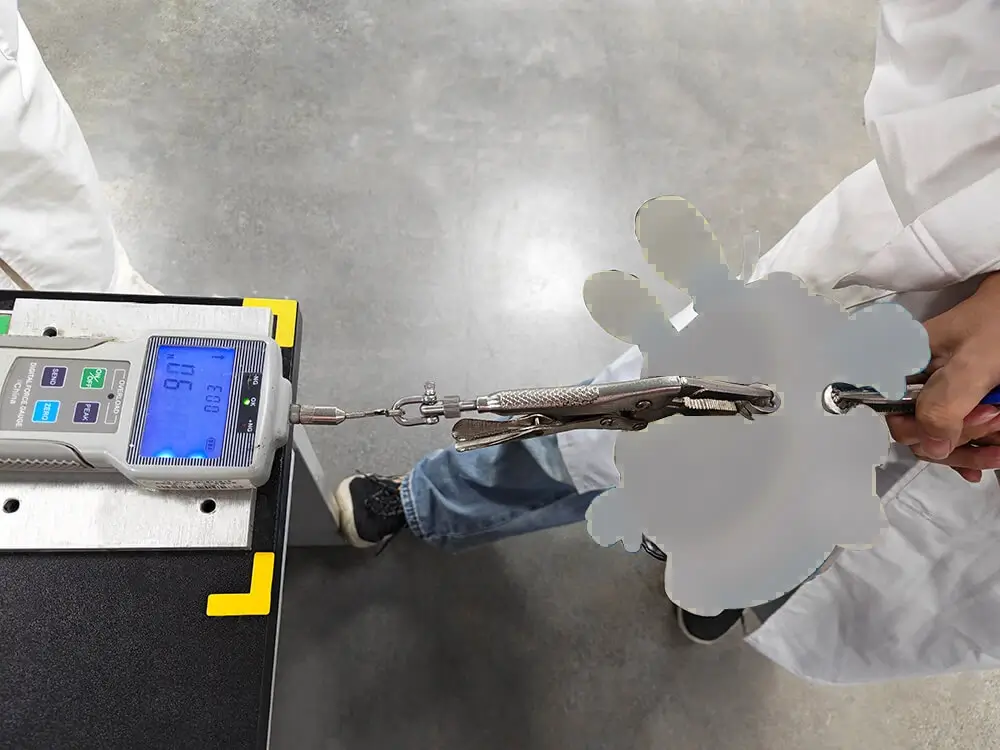
How Much Force Is Used in Pull and Torque Tests?
The force depends on the standard, component, and applicable test conditions.
For example, common component tests under EN 71-1 use the following values:
| Test | Common test value |
| Tension: maximum accessible component dimension of 6 mm or less | 50 N |
| Tension: maximum accessible component dimension greater than 6 mm | 90 N |
| Torque | 0.34 N·m |
These are examples from a specific standard, not universal values for every plush toy or market. The laboratory also follows the applicable loading procedure, holding time, and post-test assessment. Plush body seams are tested under their corresponding requirements. SGS international toy safety standards reference guide
Flammability Testing
Plush toy flammability testing evaluates the product under the methods applicable to its sales market.
Requirements and test procedures differ between markets. Passing one market’s flammability test does not automatically establish compliance everywhere else.
Chemical Safety Testing
Chemical testing addresses applicable restrictions affecting fabrics, filling, printed details, coatings, plastics, and other materials.
For example, EN 71-3 addresses the migration of certain elements. U.S. requirements also include applicable restrictions on lead and phthalates.
A fabric supplier’s report can support the technical documentation, but a material test report does not automatically replace finished plush toy testing. It does not establish whether the completed toy’s seams, attachments, or interactive features meet applicable requirements.
Sound, Light, Movement, and Interactive Modules
Custom plush toys with sound, lights, mechanical movement, or AI-enabled interactive features need those functions included in the testing plan.
Once the sample is finalized, CustomPlushMaker coordinates the relevant laboratory testing based on its actual construction. This includes applicable checks involving battery compartments, electrical components, sound output, and moving mechanisms.
We also coordinate supporting technical information for the installed module. Module development and assembly costs are listed separately from testing fees.
3. Which Toy Safety Tests Apply to Each Market?
The table below summarizes common testing programs reflected in plush projects we have handled.
Historical reports show our testing experience; new projects use the standard editions and requirements applicable at the time of testing.
| Sales market | Common standards or requirements | Main areas covered |
| United States | ASTM F963 and applicable CPSIA requirements | Mechanical and physical safety, flammability, and applicable lead, phthalate, and other requirements |
| European Union | EN 71-1, EN 71-2, and EN 71-3 | Mechanical and physical safety, flammability, and migration of certain elements |
| United Kingdom | BS EN 71-1, BS EN 71-2, and BS EN 71-3 | Mechanical and physical safety, flammability, and migration of certain elements |
| Canada | Toys Regulations, SOR/2011-17, and applicable related requirements | Mechanical and physical safety, stuffing, flammability, and applicable lead requirements |
| Australia and New Zealand | AS/NZS ISO 8124.1, 8124.2, and 8124.3 | Mechanical and physical safety, flammability, and migration of certain elements |
This is a summary of common plush toy testing programs, not a statement that every clause applies to every product or that these tests cover every possible requirement.
For example, a conventional stuffed animal and an interactive plush toy with batteries or moving parts require different assessments. We arrange the relevant testing based on the confirmed sample and identify the scope in the testing quote.
If you plan to sell the same design in several countries, tell us at the quotation stage. This helps us coordinate testing and documentation for those markets together.
4. Plush Toy Age Grading
An age label alone does not determine how a laboratory evaluates a plush toy.
Soft construction, a cuddly form, and familiar character features can make a plush toy appealing to very young children. Laboratories consider the product’s characteristics and applicable age-grading principles, rather than relying only on the age requested by the buyer.
When reviewing a plush toy test report, distinguish these four items:
| Report information | What it means |
| Client-requested age | The intended age provided with the testing submission |
| Labeled age | The age statement actually shown on the sample |
| Laboratory age assessment | The laboratory’s evaluation based on the product |
| Applied testing age range | The age range used for the reported tests |
In reports we have handled, a requested or labeled age of “3+” has sometimes appeared alongside testing covering a broader age range.
Recording a “3+” label does not mean the laboratory has agreed that requirements for younger children can be excluded.
Resolve age grading and warning language before finalizing labels. Changing the label alone is not a substitute for evaluating the product’s intended and reasonably foreseeable use.
5. Testing Samples and Your Delivery Quantity
Your 100-piece order still includes 100 finished pieces for delivery.
Laboratory testing may involve pulling, cutting, burning, or chemical analysis. Tested units may not be returned intact, so we allow for the required testing quantity in production.
| Item | CustomPlushMaker’s arrangement |
| Source of test units | Finished units from the same production batch |
| Sampling | Follows the laboratory-confirmed sampling requirements |
| Number of units needed | Based on the test program and laboratory requirements |
| Cost of producing test units | Included in the testing quote |
| Customer’s order quantity | 100 pieces |
| Customer’s delivery quantity | 100 finished pieces |
The purpose is to test products that reflect the actual production batch, rather than separately making special units solely for testing.
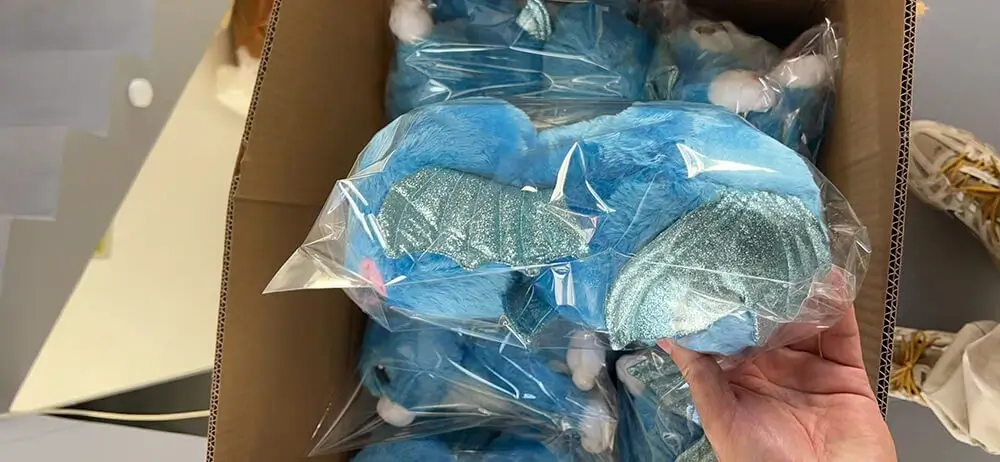
Sample Approval and Safety Testing Serve Different Purposes
Approving a sample confirms the agreed design and specifications. Laboratory testing evaluates applicable safety requirements.
Photos and videos can help confirm appearance, but they cannot establish that a seam passes a strength test or that a material meets a chemical limit.
Both steps matter when planning a small-batch custom plush order.
6. How to Read a Plush Toy Test Report
Look beyond the cover page and the overall result.
| What to check | Why it matters |
| Product name, model, and photographs | Confirms which product the report identifies |
| Standards and editions | Shows which requirements were used |
| Age assessment and test range | Shows the age-related scope applied |
| Materials, colors, and components covered | Helps identify what the report actually covers |
| Individual test results | Reveals any failed items or qualifications |
| Report date and remarks | Provides context for the testing and its limitations |
Common result abbreviations also need careful reading:
| Result | Usual meaning |
| Pass | The tested item met the stated requirement |
| N/A | The item was not applicable to the sample or circumstances |
| N.D. | The substance was not detected at the stated detection limit |
For example, a Canadian report we handled marked a plastics-related lead item as N/A because the relevant plastic components were absent.
That does not mean every material in the toy contained zero lead. Likewise, N.D. means “not detected” under the reported method and detection limit—not an absolute statement that no trace exists.
7. Test Reports and Product Certification
A test report is important supporting evidence, but it does not replace every required certificate, declaration, label, or import document.
| Market | Important distinction |
| United States | For applicable imported children’s products, the importer issues the CPC based on the required supporting testing and compliance information |
| European Union | Test reports can support the technical documentation; applicable CE marking and declaration requirements must also be addressed |
| United Kingdom | Testing, product marking, and conformity documentation are separate parts of the compliance process |
CustomPlushMaker coordinates third-party testing and provides relevant production information, including information needed for applicable tracking labels.
The importer or seller must still fulfill the responsibilities assigned to it in the destination market. For example, a laboratory report does not replace the U.S. importer’s responsibility to issue an applicable CPC. CPSC testing and certification guidance
8. Plush Toy Safety Testing Costs and Reorders
There is no single testing price that accurately covers every custom stuffed animal.
A simple plush character and a toy with multiple materials, printed details, and an interactive module can require different laboratory work.
| Cost factor | How it affects the testing plan |
| Sales market | Determines the relevant standards and documentation |
| Materials and components | Affects the materials and requirements evaluated |
| Product construction | Affects mechanical and physical testing |
| Sound, lights, or movement | May introduce electrical, acoustic, or additional mechanical testing |
| Multiple sales markets | Requires coordination of the relevant market scopes |
We list testing separately so you can see its contribution to your first-order budget. The testing quote includes the cost of producing the units required for testing.
For a 100-piece order, separating sample development, production, testing, packaging, and shipping makes it easier to compare complete project budgets.
Testing for Identical Reorders
An unchanged reorder does not automatically require a new test for every batch.
An existing report can serve as a reference, but whether it can support a particular import also involves destination requirements and acceptance of the report’s date.
In our experience, reports more than one year old have sometimes been accepted during customs clearance. That experience does not guarantee acceptance for another shipment.
Before importing, ask your importer or customs broker to confirm the documentation needed for that shipment. We can coordinate updated testing if required.
Customs release and ongoing product compliance are separate matters. An existing report does not replace other applicable obligations. CPSC guidance on periodic testing and short production runs
For an unchanged reorder, CustomPlushMaker does not charge the original sample development fee again. Any new testing is quoted separately.
9. Planning a 100-Piece Custom Plush Order
CustomPlushMaker is a custom plush manufacturer with a 100-piece minimum per design and per colorway.
We work with buyers developing original characters, custom stuffed animals, mascot plush, and branded plush merchandise. Safety testing belongs in that planning process alongside design approval and production.
To start, send us:
- Your artwork or a rough sketch.
- The approximate finished size.
- Your planned quantity.
- The countries where the product will be sold or distributed.
- Your target delivery date.
If your design includes interactive functions, we can discuss them during development. Once the sample is confirmed, we use its actual construction to coordinate testing.Looking for a low-MOQ plush manufacturer for your first 100 pieces?Request a project quote that separates sample development, production, testing, packaging, and shipping.
FAQ
CustomPlushMaker recommends budgeting for testing even for a 100-piece order. A small order does not automatically remove applicable product safety requirements. We also recommend testing for mascot plush, employee gifts, and fan merchandise.
Yes. CustomPlushMaker coordinates third-party laboratory testing for the intended sales market and lists the testing scope and fee separately in the project quote.
No. If you order 100 pieces, you receive 100 finished pieces. We allow for the laboratory’s required testing quantity in production, with those units’ production cost included in the testing quote.
No. The laboratory considers the product’s actual characteristics and applicable age-grading principles. The printed age label alone does not determine the testing scope.
No. Material reports may support the documentation, but they do not establish whether the completed toy’s seams, attachments, construction, and interactive features meet applicable requirements.
Common programs include applicable ASTM F963 and CPSIA requirements. The relevant scope can cover mechanical and physical safety, flammability, lead, phthalates, and other requirements applicable to the finished product.
Their functions must be included in the assessment. Based on the confirmed sample, we coordinate applicable battery, electrical, acoustic, and mechanical testing.
A new test is not automatically required for every unchanged batch. However, acceptance of an existing report and any additional testing obligations depend on the relevant requirements. Your importer or customs broker should confirm the documentation needed for the shipment.
Testing is listed separately. The testing quote includes the cost of producing the units required by the laboratory.