- Höfundur: Abida Din
Að finna réttan framleiðanda sérsmíðaðra plysleikfanga er mikilvæg ákvörðun fyrir öll fyrirtæki. Besta verksmiðjan er ekki alltaf hagkvæmasti kosturinn. Þetta er ítarleg rannsóknarleiðbeining. Hún kannar framleiðendur sérsmíðaðra plysleikfanga um allan heim og útskýrir hvernig vörumerki, listamenn, sprotafyrirtæki, smásalar og stofnanir geta valið réttu verksmiðjuna fyrir þarfir sínar.
Greining á heimsvísu, lönd eftir löndum
| Land / Svæði | Helstu kostir | Hugsanlegir ókostir | Hentar best fyrir |
| Kína | Stór og vel þróuð framboðskeðja; sterk framleiðslugeta; fjölbreytt úrval efna, íhluta og framleiðslugetu | Alþjóðleg flutningsleið og lengri afhendingartími fyrir suma markaði; viðskiptastefna og tollasjónarmið; verksmiðjugeta og gæði geta verið mismunandi | Nýfyrirtæki, Amazon-seljendur, vörumerki undir eigin merkjum, þekkt vörumerki, stórir smásalar og flóknar sérsniðnar mjúkar vörur |
| Víetnam | Lágur launakostnaður; viðskiptasamningur við Bandaríkin; hagstæð tollfríðindi | Minna þróað framboðskeðjukerfi; mörg hráefni og íhlutir þurfa að vera flutt inn frá Kína, sem leiðir til lengri afhendingartíma; tiltölulega lítil flækjustig í framleiðslu | Meðalstór vörumerki, vörumerki í einkaeigu og fyrirtæki sem leita að fjölbreytni í framboðskeðjunni |
| Indónesía | Lágur launakostnaður; stór vinnuaflsgrunnur; einhver reynsla af útflutningi á textíl og fatnaði | Takmörkuð sérhæfing í framleiðslu á mjúkleikföngum; áskoranir í innviðum og flutningum; ósamræmi í gæðum; háð innfluttum efnum og íhlutum. | Stórfelld, tiltölulega einföld verkefni með mjúkleikföngum |
| Indland | Lágur launakostnaður; mikið framboð af bómull og textíl | Ósamræmi í gæðum; tafir á innviðum og tollgæðum; sérhæfðir íhlutir og rafeindavörur þurfa yfirleitt að vera fluttar inn; tiltölulega fá reynslumikil gæðaeftirlitsteymi fyrir lúxusvörur. | Ný vörumerki, vörur með áherslu á textíl og valin útflutningsverkefni |
| Mexíkó | Fellur undir samning Bandaríkjanna, Mexíkó og Kanada (USMCA); stuttur afhendingartími til Bandaríkjanna og Kanada; lágur flutningskostnaður; auðveldari heimsóknir í verksmiðjur; tvítyngt vinnuafl; vel hentugt fyrir áfyllingarpantanir | Launakostnaður er hærri en í Asíu; takmarkaður fjöldi verksmiðja sem framleiða sértæka plúsh; oft þarf að flytja inn efni og íhluti. | Bandarísk og kanadísk vörumerki, smásalar og fyrirtæki sem þurfa tíðar áfyllingar |
| Tyrkland | Aðili að tollbandalagi ESB; styttri afhendingartími til Evrópu; hágæða textílvörur; strangari siðferðis- og félagslegar kröfur; hófleg lágmarkskröfur (MOX); auðveldari samskipti við evrópska viðskiptavini | Hærri kostnaður en í Asíu; takmörkuð framleiðslugeta fyrir mjúkleikföng; sum efni þarf að flytja inn; minna hentugt fyrir mjög flókin eða rafræn mjúkleikföng | Evrópsk vörumerki, vörur sem einbeita sér að textíl og miðlungsmikil framleiðsla |
| Austur-Evrópa | Fylgni við ESB staðla; stuttur afhendingartími til Evrópu; hentugur fyrir framleiðslu í litlum og meðalstórum stíl; sterk vernd hugverkaréttinda; siðferðilega í samræmi við siðferðilegar kröfur framleiðsla | Háir vinnuafls- og framleiðslukostnaður; fáar verksmiðjur fyrir mjúkleikföng; takmörkuð framleiðslugeta; innflutt efni geta aukið kostnað og valdið töfum. | Evrópsk lítil og meðalstór vörumerki, söfn, smásöluverslanir og úrvalsvörur |
| Bandaríkin/Kanada | Engir innflutningstollar; stystur afhendingartími innanlands; lág lágmarkskröfur um vöruframboð; auðveldari stjórnun hugverkaréttinda og trúnaðar; markaðsaðdráttarafl “Framleitt í Bandaríkjunum/Kanada” | Mjög hár einingarkostnaður; mjög fáar verksmiðjur; takmörkuð geta fyrir flókna tækni; ekki hentugt fyrir stórfellda framleiðslu | Háskólar, íþróttamaskottar, söfn, verkefni í litlum framleiðslulotum og fyrirtæki sem forgangsraða innlendri framleiðslu |
| Vestur-Evrópa | Framúrskarandi handverk; framleiðsla í litlum upplögum; sjálfbær og siðferðilega í samræmi við siðferðilegar kröfur; hröð afhending á staðnum; sterk samstarfshæfni í hönnun; sterk verndun hugverkaréttinda | Mjög hár kostnaður; takmörkuð framleiðslugeta; óhentugt til fjöldaframleiðslu; takmarkað framboð á hráefnum á staðnum | Lúxusvörumerki, úrvals safngripir, söfn, hágæða gjafavöruverslanir og smávörumerki |
| Japan / Suður-Kórea / Taívan | Mjög hágæða; háþróaðar efnis- og útsaumsaðferðir; strangt gæðaeftirlit og hugverkaréttareftirlit; hentugt fyrir hágæða leyfisvörur | Háir kostnaður; lítið framleiðslumagn; stórfelld framleiðsla er yfirleitt útvistuð til Kína eða Suðaustur-Asíu. | Lúxusvörumerki, úrvals safngripir og hágæða leyfisbundnar vörur |
| Bangladess, Kambódía, Mjanmar, Srí Lanka og önnur lönd | Lágur launakostnaður; reynsla af fatnaðarframleiðslu | Mjög takmarkaðar sérhæfðar framboðskeðjur fyrir mjúkleikföng; gætu aðeins hentað fyrir mjög stór, einföld mjúkleikföng; strangt gæðaeftirlit kaupanda gæti verið krafist; efni og íhlutir gætu þurft að vera fluttir inn | Mjög stórfelld, einföld plysjaleikfangaframleiðsla þar sem strangt gæðaeftirlit kaupanda er mögulegt |
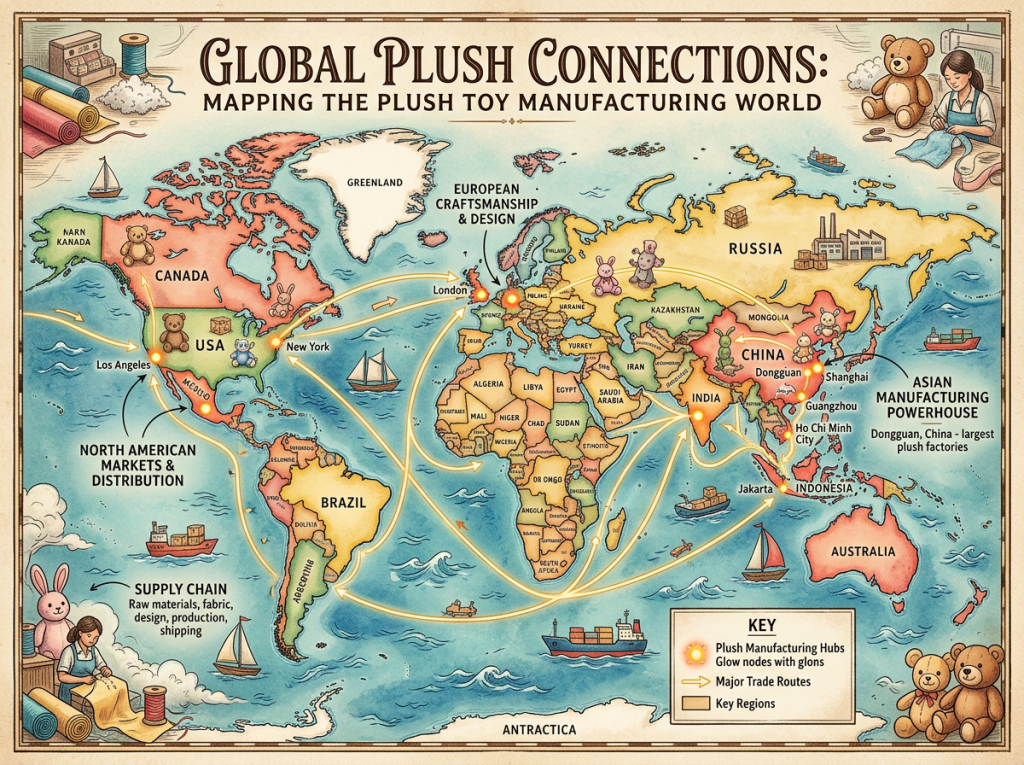
Kína: Víðtækur og sveigjanlegur valkostur fyrir sérsniðna plysjuframleiðslu
Kína er oft fyrsta framleiðslulandið sem kaupendur hitta þegar þeir rannsaka framleiðendur sérsniðinna plushleikfanga, og það er hagnýt ástæða fyrir því.
Helsti kosturinn er ekki bara verðið. Það er dýpt vistkerfisins í framleiðslu.
Kaupandi gæti verið að leita að ákveðnu efni, einhverjum flottum útsaumuðum smáatriðum, flottu prentuðu mynstri, flottum plastaukahlutum, sérsniðnum umbúðum, litlum fötum, einstöku fyllingu eða villtri smíðatækni. Traust framleiðsluþyrping getur gert það algerlega auðveldara að uppfylla þessar kröfur.
CustomPlushMaker talar í alvöru um verksmiðju sína í Kína sem býður upp á allt sem í boði er, allt frá OEM/ODM framleiðslu á plúsi, útsaum, hitaflutningsprentun, silkiþrykk og fjölda annarra sérstillinga. Þar segir að lágmarkspöntun sé 100 stykki og geti framleitt tonn í hverjum mánuði.
Kostir Kína
Kína getur verið sérstaklega aðlaðandi þegar þú þarft:
- Flóknar persónuhönnanir
- Margar gerðir af efni
- Útsaumur og prentaðar smáatriði
- Sérsniðin fylgihlutir
- Stærri framleiðslulotur
- Endurtekin framleiðsla
- Stuðningur við vöruþróun
- Samkeppnishæf verðlagning frá verksmiðjunni
- Reynsla af alþjóðlegum flutningum
- Breitt úrval birgja
Hugsanlegir ókostir
Ókostirnir eru jafn mikilvægir til að skilja.
Alþjóðlegir kaupendur þurfa að taka tillit til:
- Sendingartími
- Innflutningsferli
- Kröfur um skoðun
- Mismunur á samskiptum
- Breytingar á viðskiptastefnu
- Verksmiðjustaðfesting
- Greiðsluskilmálar
- Kostnaður við gæðaeftirlit
Annað mikilvægt atriði er að Kína er ekki einn verksmiðjumarkaður.
Tvær verksmiðjur í sama landi geta haft gjörólíkan búnað, þekkingu á mynstrun, gæðaeftirlit, lágmarks pöntunarmagn, afhendingartíma og samskiptastaðla.
Þess vegna eru upplýsingarnar „Made In China“ ekki nægar til að meta birgja mjúkravara.
Víetnam: Mikilvægur valkostur fyrir fjölbreytni í framboðskeðjunni
Víetnam hefur orðið sífellt mikilvægari fyrir fyrirtæki sem vilja auka fjölbreytni framleiðslu sinnar út fyrir eitt land.
Víðtækara vistkerfi framleiðslu á textíl og fatnaði veitir sterkan grunn fyrir framleiðslu mjúkvara, á meðan útflutningsiðnaðurinn heldur áfram að þróast.
Fyrir sum vörumerki snýst stefnumótandi gildi Víetnams minna um að finna lægsta framleiðslukostnað og meira um að skapa annan valkost.
Víetnam gæti verið skynsamlegt fyrir:
- Rótgróin vörumerki
- Meðalmagnsframleiðsla
- Vörur undir eigin merkjum
- Hönnun sem leggur mikla áherslu á textíl
- Fyrirtæki sem sækjast eftir innkaupum í Kína+1
- Vörumerki sem vilja meiri landfræðilega dreifingu
Hugsanlegar takmarkanir
Í samanburði við gríðarstórt framleiðslukerfi Kína býður Víetnam almennt upp á minni birgja og minni breidd í sérhæfðum íhlutum.
Það gerir Víetnam ekki óæðri.
Það þýðir einfaldlega að mjög flókin vara sem þarfnast margra mismunandi íhluta gæti verið auðveldari í samhæfingu í gegnum djúpstæðri framboðskeðju.
Indland: Vaxandi tækifæri fyrir mjúkar og flottar vörur
Indland hefur sterka hefð í textíl- og handverksframleiðslu og vaxandi skipulagðan leikfangaiðnað.
Fyrir alþjóðlega kaupendur getur Indland boðið upp á áhugaverðan valkost þegar forgangsatriði eru hæfni í textíliðnaði, þróun framleiðslugetu, vöruaðgreining eða fjölbreytni framboðs.
Hugsanlegir kostir
- Sterk sérþekking á vefnaðarvöru
- Mikill vinnuafl í framleiðslu
- Vaxandi leikfangaframleiðslugeira
- Möguleiki á sérhæfðri handverksmennsku
- Aukinn áhugi á útflutningsmiðaðri framleiðslu
- Gagnlegur fjölbreytnivalkostur
Hugsanlegar takmarkanir
Vistkerfi Indlands fyrir mjúkar birgja er ekki eins víðfeðmt og vistkerfi Kína og einstakir framleiðendur geta verið mjög mismunandi hvað varðar framleiðslukerfi sín og reynslu af alþjóðlegum markaði.
Það gerir hæfni birgja sérstaklega mikilvæga.
Indónesía: Rótgróinn framleiðslukostur
Ekki ætti að hunsa Indónesíu þegar verið er að rannsaka alþjóðlega framleiðslu á plúsi.
Landið hefur byggt upp framleiðslugetu á textíl- og mjúkvörum og reynslu af alþjóðlegum útflutningi.
Fyrir ákveðnar stórar framleiðsluáætlanir getur reyndur indónesískur framleiðandi verið hagnýtur kostur.
Helsta atriðið er dýpt birgja.
Kína býður kaupendum upp á mjög stóran hóp verksmiðja og birgja. Indónesía getur boðið upp á framúrskarandi framleiðendur, en markaðurinn er tiltölulega þéttari.
Það þýðir að kaupendur gætu þurft að eyða meiri tíma í að finna framleiðanda sem uppfyllir mjög sértæka hönnunar- eða framleiðslukröfu.
Bandaríkin: Þegar hærri einingarkostnaður getur enn verið skynsamlegur
Bandarísk framleiðsla er oft hafnað vegna þess að verksmiðjuverðið gæti verið hærra.
Það getur verið mistök.
Bandarískur framleiðandi gæti boðið upp á kosti sem endurspeglast ekki í upphaflegu verðtilboði fyrir einingu.
Þetta getur falið í sér:
- Auðveldari samskipti
- Innanlandsflutningar
- Hraðari lausn vandamála
- Auðveldari heimsóknir í verksmiðjur
- Einfaldari verkefnasamhæfing
- Hugsanlega minni framleiðslulotur
- Staðsetning framleidd í Bandaríkjunum
- Auðveldari gæðaeftirlit innanlands
Bandarískir framleiðendur þjóna einnig sérhæfðum mörkuðum eins og lukkudýrum, kynningarvörum, skemmtivörum, viðburðum og ofstórum plúsh.
Til dæmis markaðssetja bandarískir framleiðendur sérsniðna plúsaframleiðslu fyrir vörumerki og stór lukkudýraverkefni frekar en að keppa eingöngu um framleiðslu á hrávörum.
Hvenær ættirðu að íhuga bandarískan framleiðanda?
Innlendur framleiðandi gæti verið þess virði að íhuga þegar:
- Þú þarft aðeins lítið magn
- Frestur þinn er þröngur
- Þú þarft tíð samskipti
- Varan þín er óvenju stór
- Innlend framleiðsla er hluti af vörumerkjasögu þinni
- Þú ert að útvega háskóla eða íþróttafélagi þjónustu
- Þú þarft hraða staðbundna endurnýjun
Mikilvægi lærdómurinn er:
Einingarverð er ekki það sama og heildarkostnaður verkefnisins.
Mexíkó: Nálægðarkostur fyrir kaupendur í Norður-Ameríku
Mexíkó er annar staður sem vert er að skoða, sérstaklega fyrir bandarísk fyrirtæki sem meta landfræðilega nálægð mikils.
Mögulegir kostir eru meðal annars:
- Styttri fjarlægð til bandarískra viðskiptavina
- Hugsanlega einfaldari svæðisbundin flutningakerfi
- Auðveldari ferðalög fyrir verksmiðjuheimsóknir
- Svipuð tímabeltisþjónusta fyrir mörg fyrirtæki í Bandaríkjunum
- Fjölbreytni framboðskeðjunnar í Norður-Ameríku
Takmörkunin er sú að Mexíkó hefur ekki eins breiða framleiðsluinnviði fyrir plúsh og helstu framleiðsluklasar Kína.
Þetta gæti því verið sérstaklega áhugavert fyrir kaupendur sem hafa forgang í nálægð frekar en að hámarka úrval birgja.
Evrópa og Bretland: Vöruþróun getur verið mikilvægari en staðsetning verksmiðjunnar
Evrópskir og breskir birgjar af plysjum sýna fram á mikilvægt atriði: fyrirtækið sem selur eða þróar vöruna framleiðir hana ekki alltaf innanlands.
Sum evrópsk fyrirtæki sameina staðbundna vöruþróun, samskipti, leyfisveitingar og gæðastjórnun við framleiðslusambönd í Asíu.
Það getur verið mjög áhrifarík fyrirmynd.
Til dæmis
Bresk fyrirtæki sem framleiða plúsk geta stjórnað vöruþróun og viðskiptasamböndum á staðnum en framleitt í gegnum erlenda samstarfsaðila.
Þessi aðferð getur verið sérstaklega aðlaðandi fyrir:
- Söfn
- Menningararfsstofnanir
- Fyrirtæki með úrvals gjafavörur
- Leyfisbundnar vörur
- Evrópsk vörumerki
- Safngripir
Besta birgjasambandið er stundum þróunarfélagi ásamt framleiðsluaðstöðu erlendis, frekar en verksmiðja sem er staðsett í landi kaupandans.
Hvernig mismunandi viðskiptavinir ættu að velja sérsniðna Plush Toy framleiðanda
Þetta er þar sem val á birgja verður mun gagnlegra.
Rétta verksmiðjan fer mjög eftir því hvað þú ert að reyna að ná fram.
Kickstarter skaparar
Höfundar Kickstarter standa venjulega frammi fyrir einstakri blöndu af óvissu og tækifærum.
Þú veist kannski ekki hvort þú munt selja 100, 500, 2.000 eða 10.000 einingar.
Því ætti fyrsta forgangsverkefni þitt ekki að vera hámarksafköst verksmiðjunnar.
Leitaðu að:
- Sanngjörn lágmarksupphæð (MOQ)
- Hagkvæm sýnataka
- Margar frumgerðarendurskoðanir
- Nákvæm endurgerð persóna
- Gagnsæ framleiðslutímalína
- Möguleiki á að stækka eftir herferðina
- Gæðaeftirlit
- Umbúðavalkostir
- Skýr samskipti
Verksmiðja sem býður upp á mjög lágt einingarverð, 10.000 einingar, gæti verið minna gagnleg fyrir skapara sem þarf 300 fullunnar einingar.
Listamenn og teiknarar
Listamenn hafa oft meiri áhuga á sjónrænni nákvæmni en framleiðslustærð.
Hönnun þín gæti innihaldið:
- Óvenjuleg hlutföll
- Smáar útsaumsupplýsingar
- Sérstök svipbrigði
- Sérstakar kröfur um efni
- Ósamhverfar eiginleikar
- Óvenjulegar skuggamyndir
Verksmiðjan þarf að skilja hvernig á að breyta listaverkum í þrívíddar saumaða hluti.
Spyrðu:
Hver býr til mynstrið?
Þetta getur verið ein af mikilvægustu spurningunum í öllu verkefninu.
Framleiðandi gæti haft framúrskarandi saumafólk en lélega mynsturþróun.
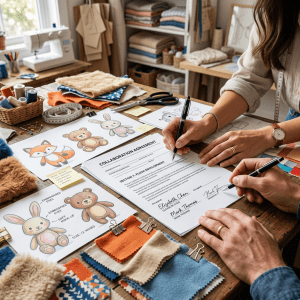
CustomPlushMaker segir að OEM/ODM vinnuflæði þeirra feli í sér stuðning við mynsturgerð og þróun, sem er einmitt sú tegund getu sem listamenn ættu að meta.
Nýfyrirtæki
Nýfyrirtæki þurfa yfirleitt sveigjanleika, kostnaðarstýringu og vaxtarmöguleika.
Góð verksmiðja ætti helst að styðja vöruna í gegnum mörg stig:
Frumgerð → Lítil framleiðslulota → Stærri framleiðsla → Endurteknar pantanir
Mikilvægar spurningar eru meðal annars:
- Hvað er lágmarksupphæðin (MOQ)?
- Er MOQ eftir hönnun?
- Hvað gerist ef fyrsta pöntunin tekst?
- Geturðu pantað sömu hönnun aftur?
- Mun verksmiðjan halda réttu mynstri?
- Er hægt að aðlaga umbúðir?
- Getur framleiðsla aukist án þess að gæðin minnki verulega?
Amazon seljendur
Seljendur á Amazon ættu að einbeita sér að lendingarkostnaði, ekki verksmiðjuverði.
Einföld útreikningur er:
Innflutningskostnaður = Vara + Pökkun + Prófun + Skoðun + Frakt + Tollar/Tollar + Annar innflutningskostnaður
Verksmiðja sem býður upp á lægsta verðtilboð á einingu gæti ekki framleitt lægsta lokakostnaðinn.
Seljendur á Amazon þurfa einnig að hugsa um:
- Samræmi vörunnar
- Endurraða áreiðanleika
- Umbúðir
- Strikamerki
- Merkingar
- Gallatíðni
- Skoðun
- Öryggissamræmi
- Birgðaáætlun
Fyrir barnavörur sem koma inn á bandaríska markaðinn getur ábyrgðin á reglufylgni verið mikil. CPSC segir að leikföng sem ætluð eru börnum 12 ára og yngri þurfi almennt prófanir og vottun þriðja aðila með barnavöruvottorði, með fyrirvara um gildandi reglur og undanþágur.
Einkamerkjavörumerki
Vörumerki með einkamerki þurfa meira á samræmi að halda en einu sinni frumgerð.
Framleiðandinn þinn ætti að geta viðhaldið:
- Sömu litirnir
- Sömu hlutföll
- Sömu efni
- Sama útsaum
- Sama fylling
- Sömu umbúðir
- Sama merking
- Samræmd gæði milli framleiðslulota
Spyrðu framleiðandann hvernig hann meðhöndlar aðalsýnið þitt.
Góður birgir ætti að skilja að samþykkt sýnishorn verður framleiðsluviðmið. Ekki bara sýnishorn sem gleymist eftir fyrstu pöntun.
Rótgróið vörumerki og leyfisbundnir persónur
Rótgróin vörumerki eiga meira í húfi.
Þegar kaupendur framleiða þekkta hugverkaréttindi ættu þeir að meta:
- Trúnaðarreglur
- IP-vernd
- Eignarhald mynsturs
- Framleiðsluöryggi
- Gæðaeftirlit
- Leyfiskröfur
- Tilvísanir í verksmiðju
- Undirverktakastarfsemi
- Rými
- Samræmisskjöl
Ekki gera ráð fyrir að yfirlýsing birgis um að hann hafi unnið með stórum fyrirtækjum sanni sjálfkrafa að hann geti stjórnað hugverkaréttindum þínum á öruggan hátt.
Staðfestu ferlið.
Spyrðu:
- Hverjir munu hafa aðgang að listaverkinu mínu?
- Er framleiðslan útvistuð?
- Hver á framleiðslumynstrið?
- Can the factory display the product publicly?
- How is confidential artwork stored?
Large Retailers
Large retailers require a completely different level of manufacturing discipline.
The buyer may need:
- Factory audits
- Third-party testing
- Social-compliance documentation
- Quality-control records
- Production traceability
- Packaging compliance
- Capacity planning
- Consistent replenishment
- Strong logistics management
At this scale, a one-cent or five-cent difference in the factory quote may matter less than avoiding:
- Failed inspections
- Retailer compliance problems
- Late shipments
- Defective inventory
- Recalled products
A reliable factory can be more valuable than the cheapest factory.
Universities
Universities commonly need mascot plush products, alumni merchandise, graduation gifts, sports merchandise and event products.
They may not need extremely large production quantities.
Instead, they often value:
- Accurate branding
- Mascot reproduction
- Moderate MOQs
- Easy communication
- Good quality
- Reliable repeat ordering
- Domestic or relatively convenient shipping
That makes a U.S. or Canadian supplier potentially attractive—even when an overseas factory has a lower unit cost.
Sports Teams and Mascots
Sports merchandise is deadline-driven.
A mascot plush may need to arrive before:
- A new season
- A championship campaign
- Alumni weekend
- A major tournament
- A promotional event
- A merchandise launch
For those projects, production speed and shipping reliability can be more important than obtaining the absolute lowest price.
Large or unusual mascot designs also require manufacturers that understand how to build substantial three-dimensional plush forms.
Museums and Cultural Institutions
Museum stores often need products that are more specialized than conventional mass-market plush.
The design may be based on:
- Historical objects
- Animals
- Cultural figures
- Artwork
- Local icons
- Archaeological subjects
- Institutional mascots
Accuracy and storytelling matter.
A successful museum plush product may also require customized packaging, educational information, premium finishing or a design that works for both children and adult collectors.
This is a case where the manufacturer’s development expertise can be as important as its production capacity.
High-End Gift Shops
Gift shops generally sit between mass-market plush and luxury collectibles.
Their customers may expect:
- Attractive fabrics
- Clean embroidery
- High-quality stitching
- Refined facial details
- Beautiful packaging
- Strong tactile quality
For these buyers, the right factory is usually one that can deliver a higher-quality appearance without making the product financially impossible to retail.
Luxury and Premium Collectible Brands
Premium plush products should be evaluated differently from ordinary toys.
A luxury or collectible product may involve:
- Premium fabrics
- Limited editions
- Complex accessories
- Clothing
- Special embroidery
- Custom packaging
- Numbered editions
- Authentication cards
- Higher inspection standards
In this category, the cheapest manufacturer may be the wrong manufacturer.
The question becomes:
Can this factory consistently reproduce the exact finish that the brand promises its customers?
How to Choose a Factory for Products Sold in Different Markets
Your sales market also affects supplier selection.
Products sold in the United States
Consider:
- Kína
- Víetnam
- United States
- Mexíkó
- Other qualified suppliers
The key factors are landed cost, testing, import requirements, production scale and delivery timelines.
For children’s toys, U.S. federal requirements can include ASTM F963-based toy safety requirements and third-party testing/certification. CPSC identifies ASTM F963 as the mandatory toy safety standard framework and states that children’s toys intended primarily for children 12 and under require third-party testing and a CPC, subject to applicable requirements.
Products sold in Canada
Canadian buyers should evaluate their supplier against Canada’s Toys Regulations and related safety requirements.
Health Canada specifically highlights mechanical hazards, flammability and requirements affecting dolls, plush toys and soft toys.
Recent Canadian compliance work is also a useful reminder that imported plush products still need close attention to compliance: Health Canada’s 2024–2025 compliance-verification project tested 25 plush products and reported nine recalls.
Products sold in Europe
European-market buyers need to evaluate CE and applicable toy-safety requirements carefully.
The EU’s new Toy Safety Regulation, Regulation (EU) 2025/2509, establishes updated safety requirements and introduces a Digital Product Passport framework for toys. The regulation requires manufacturers to create a digital product passport before placing a toy on the market, subject to the regulation’s application dates and transitional provisions.
This makes early compliance planning increasingly important for brands targeting Europe.
Products sold in Asia
Asian buyers have the advantage of being geographically closer to major manufacturing hubs such as China, Vietnam, India and Indonesia.
However, product standards vary by destination country, so the correct factory should be selected based on the regulations of the market where the product will actually be sold.
Custom Plush Toy Safety: Don’t Leave Compliance Until the End
One of the most common sourcing mistakes is treating compliance as a final paperwork exercise.
It isn’t.
Compliance can affect:
- Fabric
- Dyes
- Filling
- Thread
- Plastic components
- Eyes
- Noses
- Magnets
- Accessories
- Umbúðir
- Labels
- Age grading
- Product construction
In the United States, CPSC explains that applicable toy requirements include ASTM F963 and other children’s product safety rules. Its ASTM chart specifically identifies requirements relevant to stuffing materials and other components of certain toys.
Canada also has specific requirements for plush products. Health Canada notes, for example, that stuffing for dolls, plush toys and soft toys must be free of hard and sharp matter, while certain eyes and noses must meet mechanical attachment requirements.
Ask your manufacturer:
- Which markets have you supplied?
- Which testing laboratories do you normally work with?
- Can you provide relevant test reports?
- Can you support the documentation required by my importer?
- What happens if I change the fabric or accessory?
- Does a material change require retesting?
- Who is responsible for final certification?
Never assume that a generic CE, ASTM, or CPSIA statement automatically proves compliance for your exact product.
Algengar spurningar
Hvert er besta landið fyrir framleiðendur sérsniðinna plush leikfanga?
Það er ekki bara eitt besta landið. Kína er mjög sveigjanlegt því það hefur marga birgja og framleiðir margt. Hins vegar gætu seljendur frá Víetnam, Indlandi, Indónesíu, Bandaríkjunum, Mexíkó, Kanada og Evrópu hentað þér betur. Það fer algjörlega eftir fjölda vara sem þú þarft, hversu flókin varan er, hversu fljótt þú þarft hana og markhópnum þínum.
Hver er lágmarks pöntunarmagn fyrir sérsniðin plush leikföng?
Fjöldi varahluta (MOQ) er breytilegur eftir framleiðanda, hönnun og framleiðslukröfum. Sumar verksmiðjur auglýsa lágmarksfjölda í kringum 100 stykki, en aðrar krefjast stærra magns. CustomPlushMaker auglýsir nú lágmarksfjölda í 100 stykki fyrir sérsniðna plushframleiðsluþjónustu sína.
Get ég pantað sérsniðin plysjaleikföng í litlu magni?
Já. Sumir framleiðendur bjóða upp á lága framleiðslukröfu (MOQ), þó að litlar pantanir hafi almennt hærri kostnað á hverja einingu vegna þess að sýnatöku-, mynstur-, uppsetningar- og launakostnaður verksmiðjunnar dreifist yfir færri vörur.
Hversu langan tíma tekur það að framleiða sérsniðin plush leikföng?
Tímalínan fer eftir því hversu flókin varan er, hversu margar frumgerðir við erum að tala um, hvaðan við fáum efni, heildarstemningunni varðandi samþykki, pöntunarmagni og verksmiðjuáætlun. Reynið alltaf að biðja um aðskildar kostnaðaráætlanir fyrir sýnatöku og magnframleiðslu.
Er Kína gott fyrir framleiðendur sérsniðinna plush leikfanga?
Já. Kína býr yfir breiðu og þroskuðu framleiðslukerfi fyrir sérsniðnar mjúkar vörur. Það hentar best fyrir flóknar hönnun, stórar pantanir, útsaum, fylgihluti, umbúðir og að framleiða sama hlutinn aftur og aftur. En viðskiptavinir ættu samt að skoða hverja verksmiðju fyrir sig í stað þess að halda að allir birgjar geti gert sömu hlutina.
Eru sérsniðin plush leikföng örugg fyrir börn?
Þau geta verið það, en fullunnin vara verður að uppfylla kröfur sem gilda um fyrirhugaðan markað og notkun. Í Bandaríkjunum þurfa leikföng fyrir börn, sem fyrst og fremst eru ætluð börnum 12 ára og yngri, almennt að vera prófuð og vottuð af þriðja aðila samkvæmt gildandi reglum um öryggi barnavara.
Hvaða öryggisstaðlar gilda um mjúkleikföng í Bandaríkjunum?
Viðeigandi kröfur geta verið meðal annars ASTM F963 og aðrar alríkisreglur um öryggi barnavara. CPSC segir að ASTM F963 sé bindandi öryggisstaðall leikfanga sem er innleiddur í alríkisreglugerðir, með núgildandi viðurkenndri útgáfu og viðeigandi ákvæðum sem gilda um vörur sem falla undir gildissviðið.
Eru öryggiskröfur fyrir mjúkleikföng sem seld eru í Kanada?
Já. Leikfangareglugerðir Kanada innihalda kröfur um vélræna hættu, eldfimi og aðra öryggisáhættu sem hefur áhrif á dúkkur, mjúkleikföng og mjúkleikföng. Heilbrigðisþjónusta Kanada hefur einnig framkvæmt sérstök verkefni til að staðfesta samræmi við reglugerðir sem varða mjúkleikföng.
Hvað ætti ég að senda sérsniðnum plushframleiðanda?
Þú getur sent inn listaverk eða skissur, mál, liti, tilvísunarmyndir, efni, fylgihluti, umbúðaþarfir og hversu margar þú ert að leita að? Takk! Þegar þú hefur nákvæmar upplýsingar um vöruna er miklu auðveldara fyrir framleiðendur að gefa þér nákvæm tilboð.
Ætti ég að velja OEM eða ODM framleiðslu?
Veldu OEM (OEM) þegar þú ert þegar með þróaða hönnun eða forskrift. ODM (Offer Delivery Manufacturer) getur verið gagnlegra þegar þú ert með hugmynd eða grófa hugmynd og þarft hönnunar- og þróunarteymi framleiðandans til að aðstoða þig við að búa til lokaafurðina.
Hvernig forðast ég lélega framleiðslu á plúsi?
Gakktu úr skugga um að taka sýnishorn, setja upp aðalsýnishorn sem allir eru sammála um, tvíathuga efnin, kíkja á framleiðsluna, ganga úr skugga um vikmörk, fara yfir prófunarþarfir og skrifa niður hvernig eigi að takast á við galla áður en þú sendir inn stóra pöntun.
Niðurstaða
Framleiðendur sérsniðinna plush leikfanga snúast ekki bara um að ná lægsta mögulega verði eða velja verksmiðjuna með mestu framleiðsluna.
Þetta snýst allt um að ná fullkominni blöndu af hönnunarhæfileikum, lágmarkspöntunarmagni, gæðum, framleiðslugetu, reglufylgni, samskiptahæfni, flutningum og áreiðanleika til langs tíma litið.
Rannsakaðu landið. Rannsakaðu síðan verksmiðjuna. Rannsakaðu síðan hagfræði verkefnisins í heild sinni.
Sú aðferð gefur skaparum, vörumerkjum, smásöluaðilum, samtökum og söfnurum mun betri möguleika á að breyta glæsilegri hugmynd í farsæla fullunna vöru.